
Why You Need This
The Rivo Methodology
Pipeline Audit
Automation Engineering
Shift-Left Security
SRE Enablement
Consulting & Strategy

DevOps Assessment
Infrastructure as Code (IaC)
DevOps Performance Monitoring
Kubernetes Orchestration
CI/CD Pipeline
Continuous Integration (CI)
Continuous Deployment (CD)
Automation Infrastructure
Configuration Management
CI/CD Pipelines
Code Quality Checks
Version Control
Cloud Deployment
Infrastructure as Code (IaC)
Configuration Management
Infrastructure Configuration Automation
Configuration as Code (CaC)
Configuration Management
Release Management
Frequently Asked Questions
What are DevOps services?
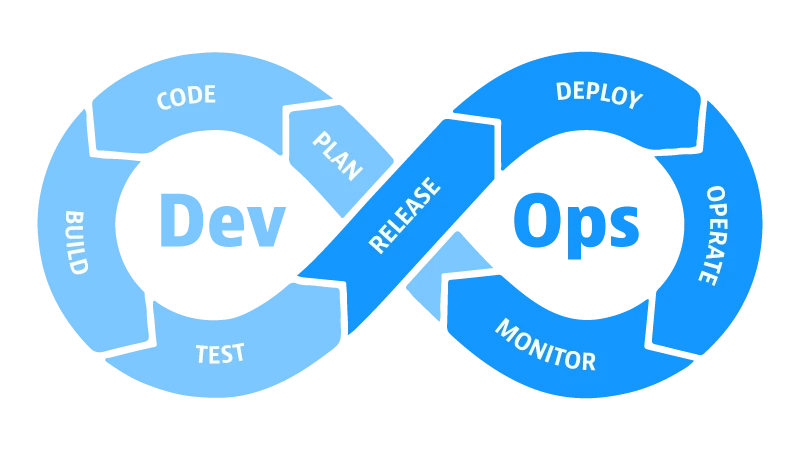
DevOps services remove the friction between development and operations through automation. In practice that means CI/CD pipelines that build, test and deploy code without manual steps, Infrastructure as Code so environments are reproducible, and monitoring that shows whether releases are actually getting faster and safer.
What is Infrastructure as Code?
Infrastructure as Code means defining servers, networks and services in version-controlled files rather than configuring them by hand. Entire environments deploy in minutes, identically every time. It removes configuration drift between staging and production, and makes infrastructure changes reviewable like any other code change.
What are DORA metrics and why do you track them?
DORA metrics are deployment frequency, lead time for changes, change failure rate and time to restore service. They are the industry standard for measuring delivery performance. Rivo tracks them so a DevOps engagement is judged on measured improvement rather than on tooling installed.
What is DevSecOps?
DevSecOps integrates security scanning directly into the developer workflow instead of treating it as a gate at the end. Dependency checks, secret scanning and static analysis run inside the pipeline, so vulnerabilities surface while the code is still being written and cost far less to fix.
How quickly will we see faster releases?
Teams typically see measurable improvement in deployment frequency within the first 6 to 8 weeks, once the initial pipeline is live. The larger gains in lead time and change failure rate follow as test automation coverage grows over the following quarter.